
Paver sealing for Cedar Hills homes
Paver Sealing in Cedar Hills, FL
Cedar Hills Estates homes run 910 to 3,248 square feet; call (904) 914-8201 for a free paver estimate sized to yours.
- Brings out deeper paver color
- Fresh joint sand helps lock pavers in place
- Gives weeds less room to grow
- Makes the surface easier to keep clean
- Free estimate, no obligation
Request a Free Estimate
Free, no obligation.
Fast, careful paver sealing in Cedar Hills
Cedar Hills homeowners can start paver sealing with a free estimate from a local contractor who cleans, re-sands and seals drives, patios and walks. Homeowners from Blanding Boulevard to Lane Avenue can expect a reply within 1 business day, usually much sooner. Call (904) 914-8201 to ask about your pavers.
Walk out through the sliding door and look at the patio. Is the sand gone from the joints, with weeds standing in the gaps and a gray cast over the color? A wash, new sand and a sealer coat put the pavers back to one even tone, and you can request your free estimate to find out how.
Why hire a local paver sealing contractor in Cedar Hills?
Cedar Hills has about 3,000 brick and block ranch homes in seven neighborhoods, many with wide front setbacks and room for a long drive. To hear what yours would need from a local contractor, request your free estimate.
A free, measured estimate
Cedar Hills drives, patios and walks are measured before any quote, and the visit is free with no obligation.
Pricing by the square foot
Hold a Cedar Hills quote up to the $1.75 to $3.25 per square foot range published around Northeast Florida.
Two days, then dry
One Jacksonville company says its job takes two days and the sealer needs about 24 hours to dry. Ask for the plan on yours.
A finish for a brick ranch
A natural-look sealer keeps color close to what it is. A wet look deepens it, and it shows wear sooner in drive lanes.
Get Your Free Estimate in Cedar Hills
Tell us about your pavers in Cedar Hills.
Free, no obligation
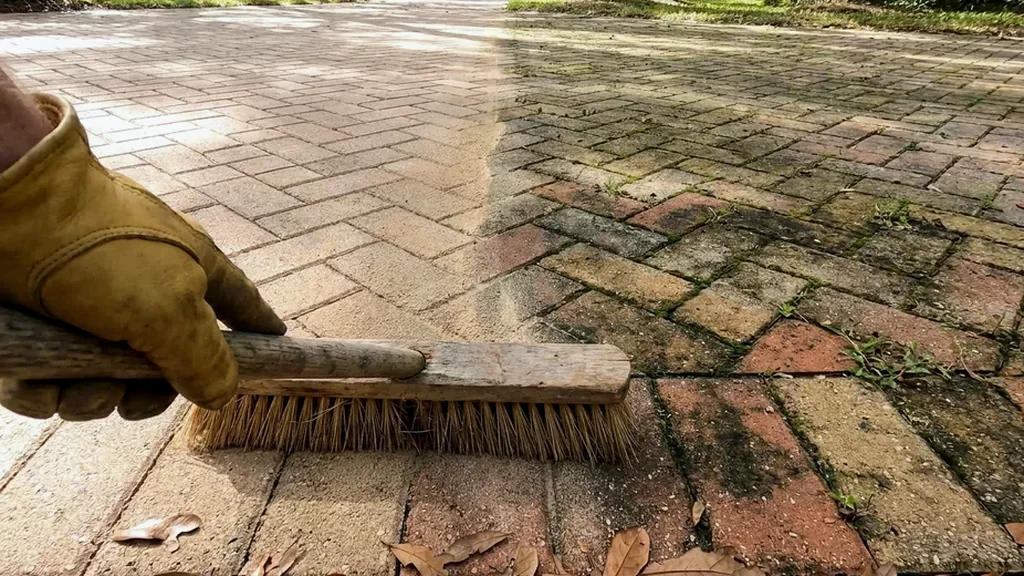
What paver problems show up most in Cedar Hills?
Sand that stays soft in the humid months
A Jacksonville paver company says polymeric sand needs a long dry spell to set and can stay soft in year-round humidity. Most of Jacksonville's yearly rain falls between May and September, often in short, hard storms. Sand that has not set can wash out of the joints. That is why one company locks kiln-dried sand in place with a flood coat of sealer. Ask the contractor which sand and which method your quote assumes.
A water table that rises after hard rain
The USDA describes the Ortega soil series, first described in Duval County, as moderately well drained sand, and says its water table rises for about 1 to 10 days after heavy rains in wet periods. Cedar Hills also has a large network of drainage ditches and canals. In August 2017 a blocked storm drain and ditch sent water onto neighboring properties, and the ground caved in. Pavers on wet ground need extra time to dry before sealing, so a low corner by a ditch may set the schedule for the whole job.
A white, flaking coat from an earlier job
One Jacksonville cost guide says white, hazy or flaking sealer from a prior job must be stripped first. Another company says nearly every call about white sealer traces to sealing damp pavers or laying it on too thick. A Cedar Hills ranch can have had several owners since the 1950s, and a patio may have been sealed more than once. If a coat peels or looks milky, tell the contractor early, since stripping changes both the plan and the price.
Hot rubber and turning tires on a long drive
PaverGuard says driveways carry hot rubber and road grime, and that turning tires shorten the reseal cycle. It puts full-sun driveways at about 18 to 24 months between coats. Cedar Hills lots typically have large frontages and wide front setbacks, so the drive can run long. More length means more surface in the sun, and the drive tends to show wear before the patio does.
Oil and rust that will not fully lift
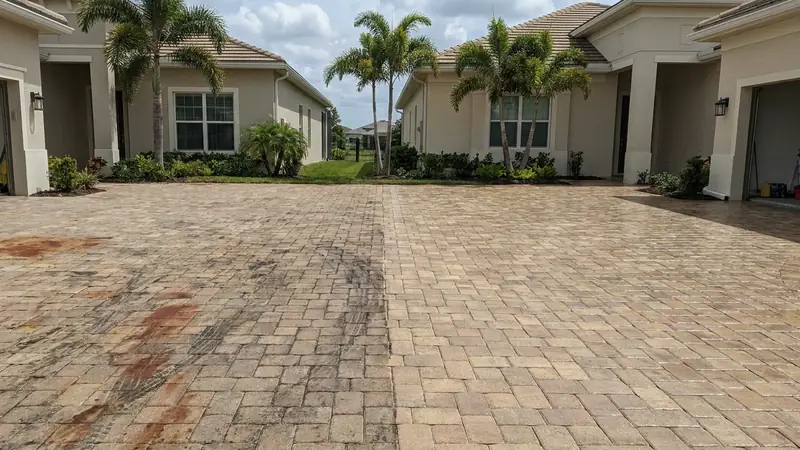
A Jacksonville paver sealing company pre-treats oil and rust, and says some deep stains will not come out completely. Sealing locks in a surface as it is, so a stain that stays gets sealed in. Ask the contractor to show you the stain after washing and before the coat goes on. Then you can decide what you are happy with, instead of finding out after the sealer is dry.
Do I need HOA approval to seal pavers in Cedar Hills Estates?
Often not. In Cedar Hills Estates, 21 listings on one real estate page state there is no HOA. That leaves the finish up to you, though your own closing papers are the place to confirm it, since a listing is not a legal record. Florida Statute 720.3035 covers the cases where an association does exist, and when you are ready, request your free estimate.
Cedar Hills has seven residential neighborhoods and about 3,000 homes. Sweetwater, built mostly from 1949 to 1953 near I-295 and Wilson Boulevard, has streets named Luke, Matthew, Mark, John and Esther. Cedar Hills Estates homes were built from 1955 to 1971 and run from 910 to 3,248 square feet. A small house and a large one have different patios, so call (904) 914-8201 and describe yours.
Along the Cedar River shore, many homes have been expanded or replaced with much larger ones. A bigger house often brings a bigger back patio and a longer drive, which raises the square footage. In Cedar Hills Estates, none of 33 geocoded homes sits in a FEMA flood hazard zone, with a median elevation of 27 feet. Tell the contractor which part of Cedar Hills you live in when you request your free estimate.
What does paver sealing cost in Cedar Hills?
Around Northeast Florida the going published rate is $1.75 to $3.25 per square foot for cleaning, sanding and sealing. One Jacksonville company prices by square footage and says the porosity of the pavers and how dirty they are can affect the price. Cedar Hills lots have wide frontages, so a long drive adds footage quickly. To price yours, request your free estimate.
Old coats can add cost. Safe Touch says strip-and-reseal runs higher when the old coat has failed, and a cost guide says smaller projects cost more per square foot because prep does not shrink with size. A patio off a sliding door is a small job, and a drive is a big one. Call (904) 914-8201 and ask for the quote by surface.
| Paved area | Typical example | Clean, sand and seal |
|---|---|---|
| 300 sq ft | Small patio or walkway | $525 to $975 |
| 600 sq ft | Two car driveway | $1,050 to $1,950 |
| 1,000 sq ft | Large driveway or pool deck | $1,750 to $3,250 |
| 1,500 sq ft | Driveway plus pool deck | $2,625 to $4,875 |
Math based on the $1.75 to $3.25 per square foot that Northeast Florida paver companies publish. Your contractor sets the actual price after seeing the surface. Repairs, leveling and stripping failed sealer are usually extra.
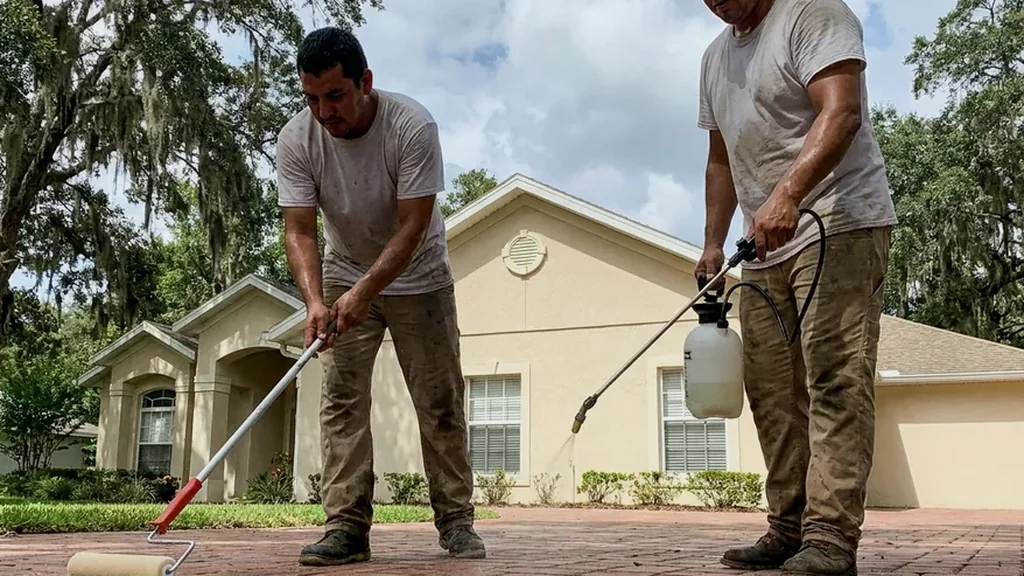
How does a paver sealing job work in Cedar Hills?
Look at the old coat and where the water goes
The contractor checks what is on the surface and where rain runs after a storm, especially near a ditch or low corner. One company strips pavers sealed with an oil-based product on about 10 to 20 percent of its projects. Sunken areas are repaired before sealing, since sealing locks in whatever is there. A walk of the whole lot, front to back, comes first.
Wash and treat the stains
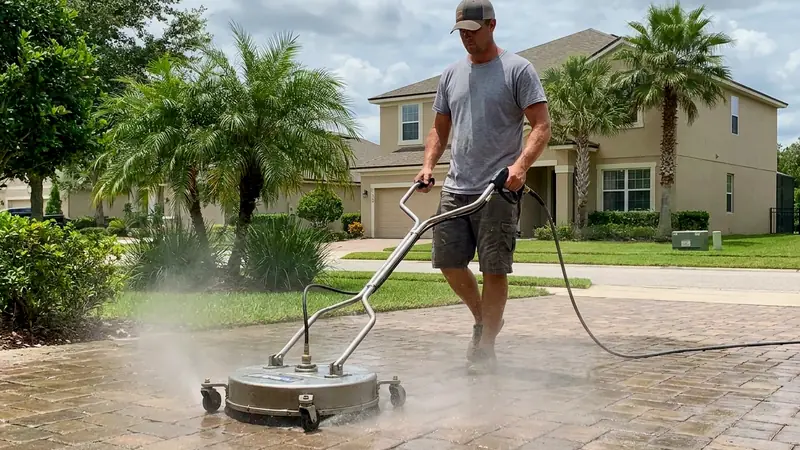
Cleaning lifts the gray film and weeds from the joints, and the wash is kept gentle so it does not scour the surface. Spots of oil and rust are treated ahead of the wash, though the worst ones may leave a shadow. Rinse water is kept off the brick and block walls and the sliding doors beside the patio. The contractor shows you what remains before any coat goes down, so nothing is sealed in by surprise.
Fill the joints and let the sand set
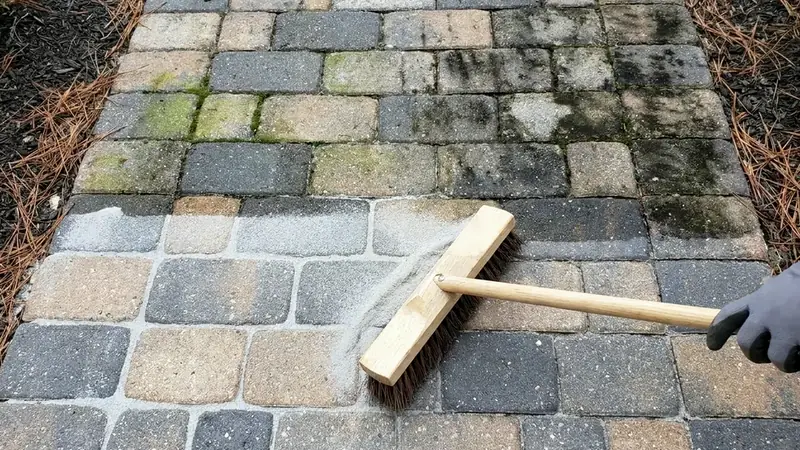
Washing removes joint sand, so fresh sand goes in before sealing. The sand is swept in until the joints are full. One company says polymeric sand needs a long dry spell to set and can stay soft in year-round humidity, so it locks kiln-dried sand in place with a flood coat of sealer. Joint sand comes in six colors from some companies, and samples can be shown at the estimate, so you see the color before the sand goes in.
Wait for the ground to dry
A dry surface comes first, and that usually means 24 to 48 hours after cleaning. PaverGuard says spring and fall often offer the most stable weather, and never to seal right before a forecast downpour. Pavers near a ditch may need longer. The contractor holds the job if the surface still feels cool and damp, because a damp start is how a coat turns white.
Seal, even out the puddles and stay off
Pros spray the sealer, back-roll it, and roll out standing puddles so the finish dries even. A roller by itself can leave lap marks, and a sprayer by itself can lay it on thick. Per Sealteam Jax, walking can resume after 2 to 4 hours and cars after 24. Another company says its sealer takes about 24 hours to dry. Companies commonly quote two to five years before the next coat, so ask which end suits a long, sunny drive.
Complete paver services in Cedar Hills
Every Cedar Hills job moves in the same order: inspect, wash, fill the joints, dry, seal. The joint step carries extra weight here, since polymeric sand needs a long dry spell to set. One local company says a job takes two days, with about 24 hours of drying. To see how that fits your week and when the drive is off limits, call (904) 914-8201.
Ranch homes here have patios off the sliding doors, attached garages with drives, and walks from the street across wide front setbacks. Each surface wears differently, with the drive taking tires and the patio taking sun and spills. Ask for each surface by name in the quote, so you can compare the drive to the patio. Say which ones you want done when you request your free estimate.
Four finishes are common: wet look high gloss, wet look satin, natural matte and a penetrating natural stone finish. Natural-look sealers keep color close to what it is, and wet looks deepen it. A wet look shows wear in drive lanes, one company says. Ask to see a sample before you choose, then call (904) 914-8201.
PaverGuard says spring and fall often offer the most stable weather for sealing, and never to seal a damp surface. In Cedar Hills, that also means checking the low corners near any ditch. Jacksonville's driest stretch runs November through April. For a date that works for your street, request your free estimate.
Questions to ask before you hire
- Can you seal the driveway now and the back patio later?
- Can you clear the white haze that shows up on newer pavers?
- Will the sealer make my driveway slippery when it rains?
- What happens to the weeds and moss growing in my joints?
- Is there a fee if rain pushes my job back a day?
- Will I get a written estimate with the square footage before I agree to anything?
- Will you tell me the sealer brand and the finish, matte, satin or wet look, before the job?
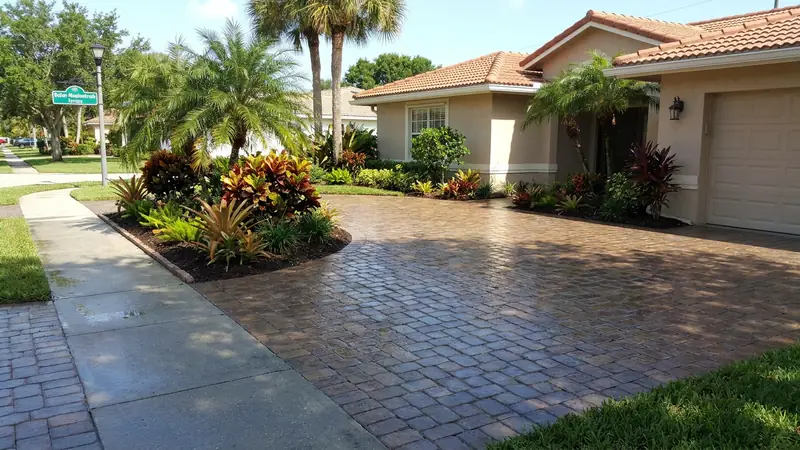
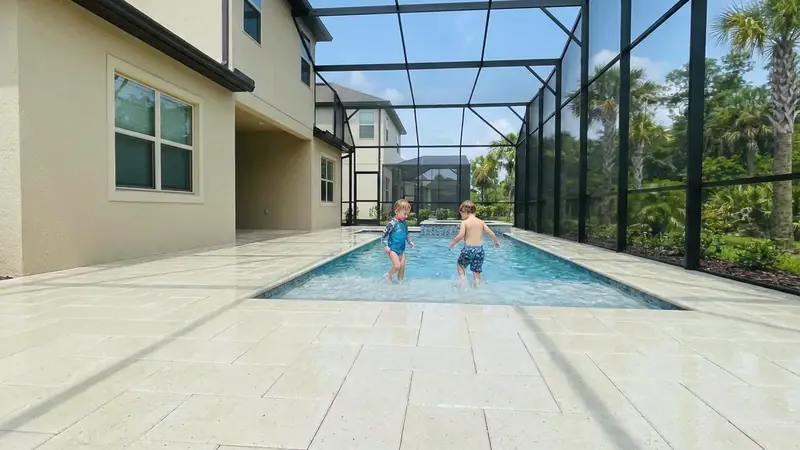
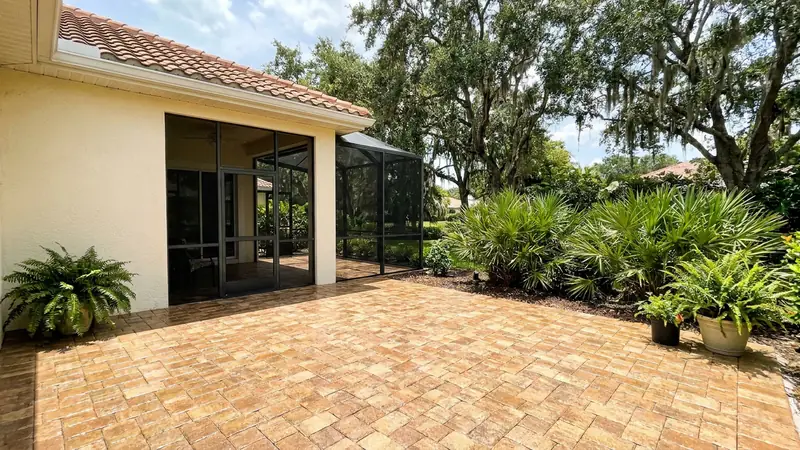
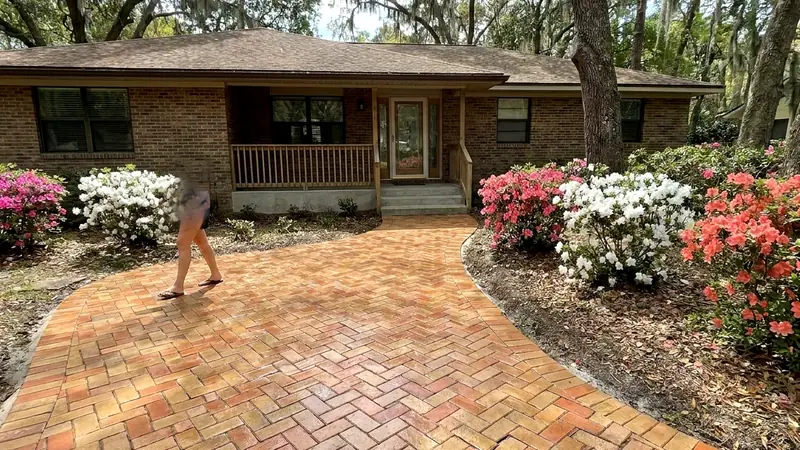
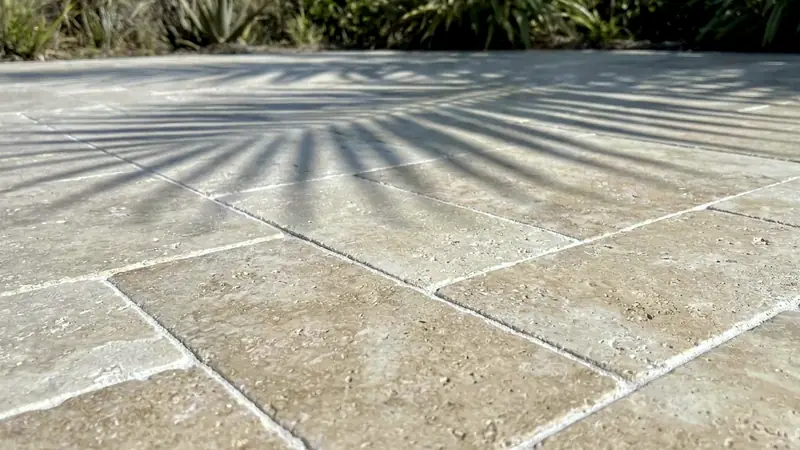
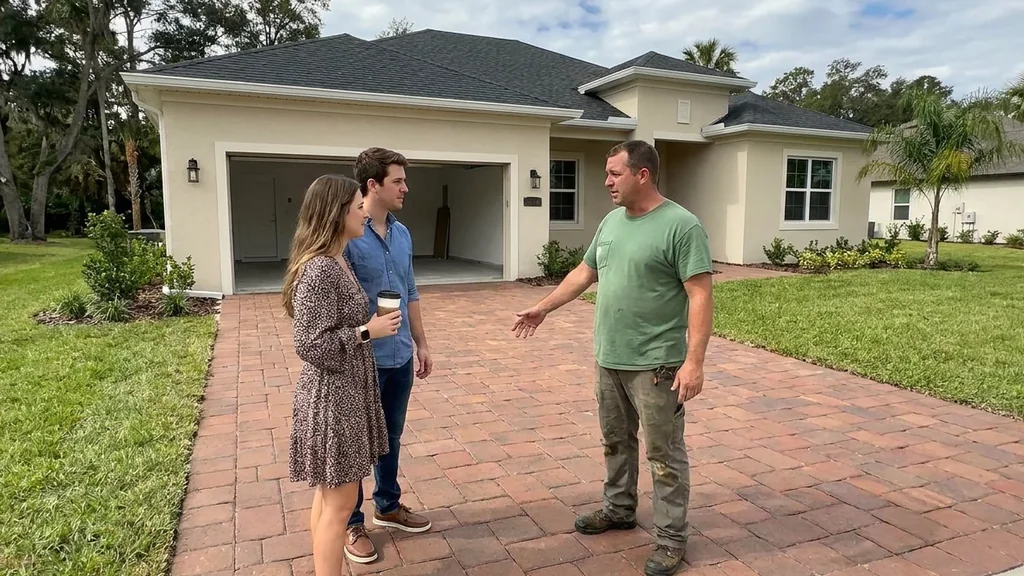
What do sealed pavers look like around Cedar Hills?
Why local matters in Cedar Hills
Cedar Hills was planned with homes and shops kept apart, and commercial uses sit along corridors such as Blanding Boulevard and 103rd Street. The 1959 street grid has no cul-de-sacs and several routes in, per MetroJax, so a contractor has more than one way to your door. A local contractor already knows those routes, which helps on a day when a main road is slow. Call (904) 914-8201 to reach one who works this side of the Westside.
Ditches and canals run through the neighborhood, and a blocked one in August 2017 sent water onto neighboring properties and caved in the ground. Public Works said it would remove the blockage and repair the headwall. A local contractor looks at where your lot drains before any coat goes down. To ask about yours, request your free estimate.
Cedar Hills sits about seven miles southwest of downtown, between Blanding Boulevard, 103rd Street, Ricker Road and San Juan Avenue. A contractor already on the Westside has a short drive to your street, and a short drive keeps a rescheduled visit simple. When rain moves a job, that makes the next open day easier to find. To check dates, request your free estimate.
Which Cedar Hills places help a contractor find my pavers?
Start with the shopping district. The Cedar Hills Shopping Center was completed in 1955 and covers 282,000 square feet, and Anchor Plaza on 103rd Street opened in 1970. The Wesconnett public library sits at 103rd Street and Harlow Boulevard. Name the one closest to your street when you request your free estimate, and add the cross street if you know it.
Parks and schools help too. Cedar Hills Park has a public pool and was renovated in 2002, with a pedestrian bridge linking nearby backyards to it. The Mary Lena Gibbs Community Center sits in the former Cedar Hills National Guard Armory, built in 1957, and Cedar Hills Elementary has served the area since 1956. If you are near any of these, call (904) 914-8201 and name your cross street.
Frequently Asked Questions
How long do paver sealers last in Cedar Hills?
Most Northeast Florida companies quote somewhere between two and five years per coat. PaverGuard puts full-sun driveways at about 18 to 24 months and shaded walkways at 24 to 36. One company says to recoat when water stops beading and soaks in.
Is it good to seal pavers in Cedar Hills?
Yes, in most cases. One Jacksonville company says sealed joint sand becomes a hard barrier that slows weeds and ants, and another says unsealed concrete pavers fade noticeably within 3 to 5 years. Because sealing locks in what is there, repairs are done before the coat. That order protects the coat.
How much does it cost to have pavers cleaned and sealed in Cedar Hills?
Shops in Northeast Florida commonly list $1.75 to $3.25 per square foot to clean, sand and seal. A long driveway adds footage quickly, and a failed old coat adds stripping. Ask for the measured area and the price by surface.
Why is paver sealing so expensive in Cedar Hills?
Prep does not shrink with the size of the job, so smaller projects cost more per square foot. Failed sealer must be stripped first, and one company says the porosity of the pavers and how dirty they are can affect the price. Washing, sanding and drying come before the sealer, and each takes real time.
How long does it take to seal a Cedar Hills driveway?
One Jacksonville company says its job takes two days and the sealer needs about 24 hours to dry. Another says foot traffic needs 2 to 4 hours and cars need 24. Ask the contractor for the exact steps and times on your product, and keep the car off until they say it is safe.
Can a Cedar Hills ranch have an HOA that controls my sealer finish?
Some can, though 21 Cedar Hills Estates listings on one page state there is no HOA. Where one exists, read its declaration or guidelines before choosing a finish. Check your closing papers first, and ask the neighborhood association if one exists.
Can I seal pavers near a drainage ditch in Cedar Hills?
Yes, once the ground and the pavers are dry. Cedar Hills has a large network of ditches and canals, and one source says never to seal a damp surface. Pavers should dry 24 to 48 hours after cleaning, so a low corner may need extra time. A contractor can check it during the estimate.
Should I choose a wet look or a natural finish for a Cedar Hills driveway?
It depends on the look you want. A wet look deepens color but shows wear in drive lanes, while a natural matte keeps color close to what it is. Four finishes are common, and one company brings samples to the estimate. Ask to see the color on a sample, and ask how the finish looks on a paver like yours.
Ready for a Free Estimate in Cedar Hills?
Call (904) 914-8201 and tell us about your pavers.
Free, no obligation